Erasmus+ Projects

Incoming students - general info
 If you are looking for a place to study that offers academic experience and police professionalism, our University welcomes you. Students from all over the Europe are welcome to become part of our academic community. Our University offers one bachelor’s and one master’s program with subjects in English. If you want to know more about procedure on how to apply for a visit, please contact our Erasmus+ coordinators: vkjs at mup.hr.
Discover Croatian police
Low crime rate - one of the safest countries in Europe
Croatia is consistently ranked as one of the safest countries in the world regarding crime rate figures and clearance rate of reported crimes, offering students a secure and interesting place for living and studying.
Fingerprinting discovery
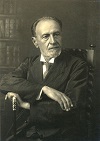 Forensic fingerprinting originates from Croatian police officer Ivan Vučetić (Juan Vuchetich). He was anthropologist and identification officer in Argentina police who revolutionized forensic science by creating the first ten-fingerprint identification system and named this discipline "the dactyloscopy". He successfully applied fingerprint comparison in the first case od the homicide in the world in 1892, almost ten years ahead of the European countries. He solved a case (Francisca Rojas) of multiple child murder, what means he found an actual killer and proved that reported suspect was falsely accused. He divided fingerprints into four primary types: arches, loops (internal and external), and whorls. By combinations of numbers and letters for these patterns, he created a unique formula for every person.This methodology meant police could search a suspect's fingerprints using record cards. He designed police tools, including a standardized dactyloscopy table to capture fingerprints. In 1904, he published his textbook Dactiloscopía Comparada (Comparative Dactyloscopy). Vučetić efforts led Argentina to issue the world’s first identity documents containing fingerprints in year 1900. Numerous institutions, schools, and police academy facilities are named in honor of Ivan Vučetić.
 Speedometer invention
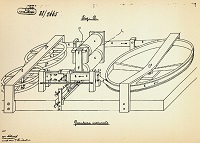 The electric velocimeter (the early name for the speedometer) was invented in 1888 by Croatian inventor Josip Belušić (Giuseppe Bellussich). After completing his education in Vienna, he began working as a professor of physics, and later he was the director of the Naval Academy in Trieste. He created a device that could measure the speed, driving time, and stopping time, as well as the time needed for the passengers to enter and exit the vehicle. At the World Exhibition in Paris 1889 he presented velocimeter and won praise for accuracy. He received a patent from the French government. Belušić’s speedometer devices were installed in Paris coaches. The speedometer also worked as a tachograph - it registered the vehicle’s functions - and also a taximeter.
 Establishment of the first police units in Croatia
Night or city guards served as the primary means of maintaining security within the walls of fortified towns during the Middle Ages (e.g., the Statute of Dubrovnik from 1270). In Zagreb (Gradec), guards, wall sentries, and gatekeepers performed law enforcement functions are described in year 1437 Statute. If a perpetrator needed to be apprehended, bells would ring, and all citizens were required to report with their weapons to participate in arrest. Security duties were a shared responsibility of all citizens. Medieval regulations mandated the carrying of blade weapons for self-defense and the protection of others against offenders, as well as for participation in pursuits. Citizens who failed to participate were liable for covering damages resulting to victim from the criminal act. In response to a rise in criminal activity, frequent attacks on wealthy citizens, and decrease of security outside the city walls, Empress Maria Theresa established the City Guard in Varazdin as a law enforcement unit in 1750. Its members wore uniforms and carried firearms. In 1850, under Austrian rule, a gendarmerie was established in Croatia alongside the existing police force. An Imperial and Royal Police Directorate was also established in Zagreb.
The first Criminal police units in 1882
 The first criminal police officers were employed in 1882 by the Zagreb Police Department under the title of "civil police agents" (civilni redarstvenici). In 1885, the Police Agents' Bureau (Zavod redarstvenih agenata) was established in Zagreb as the first Croatian professional criminal police unit. These officers did not wear uniforms, they carried a special identification card and a city badge. This specialized organizational structure fostered professionalization and the development of criminal investigation practices.
The first textbook on criminalistics in 1909
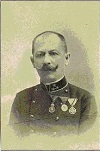 Gendarmerie officer Milan Mizler played a prominent role in fostering the development of criminalistics and the professionalization of police work in Croatia. He published numerous works and manuals regarding the procedures of police authorities, thereby laying the groundwork for the development of criminalistics as a science in Croatia. Mizler studied law in Zagreb and Graz, which enabled him to connect with the Austrian judge and professor Gross who granted him permission to adapt his books. Mizler’s 1909 book "Potražna služba" (Investigation Service) was the first work on criminalistics published in Croatia. Mizler initiated training exercises at the university, established a collection of traces and other evidence (The Criminal Museum), and founded an educational unit within the gendarmerie.
https://erasmus-plus.ec.europa.eu/hr
ERASMUS CHARTER FOR HIGHER EDUCATION 2021-2027